
Tree Decisions
What Happens During a Professional Tree-Service Estimate and Work Plan
See how a tree-service estimate moves from property goals and site review to a written work plan covering access, safety, debris, exclusions, and scheduling.
A tree-service estimate is not just a total at the bottom of a page. Its real job is to turn a concern such as a broken limb, needed clearance, a removal request, or a remaining stump into work that both the property owner and crew understand the same way.
The process usually begins before the visit with an address, photos, and a description of the desired result. It becomes more specific as the tree, surrounding property, access route, utilities, debris plan, and exclusions are reviewed. Scheduling should follow agreement on that scope, not substitute for it.
The request defines the question to be answered
Start with what happened or what you want to accomplish. Useful descriptions include a limb broken during recent wind, branches interfering with a driveway, a tree conflicting with a planned project, or a stump affecting mowing. Avoid assigning a disease, structural diagnosis, or guaranteed solution from appearance alone.
Send the exact property location and current photos from safe positions. Include the full tree, trunk base, target branches or visible damage, nearby roofs and fences, and the entrance to the work area. For storm damage, explain what is suspended or resting on property and whether essential access is blocked.
The site review connects the tree to the property
During an on-site review, the estimator can confirm which tree or trees are included, clarify the goal, and look at visible conditions that may affect the proposed method. The review should also identify homes, utility lines, neighboring property, vehicles, pedestrian areas, and other possible targets.
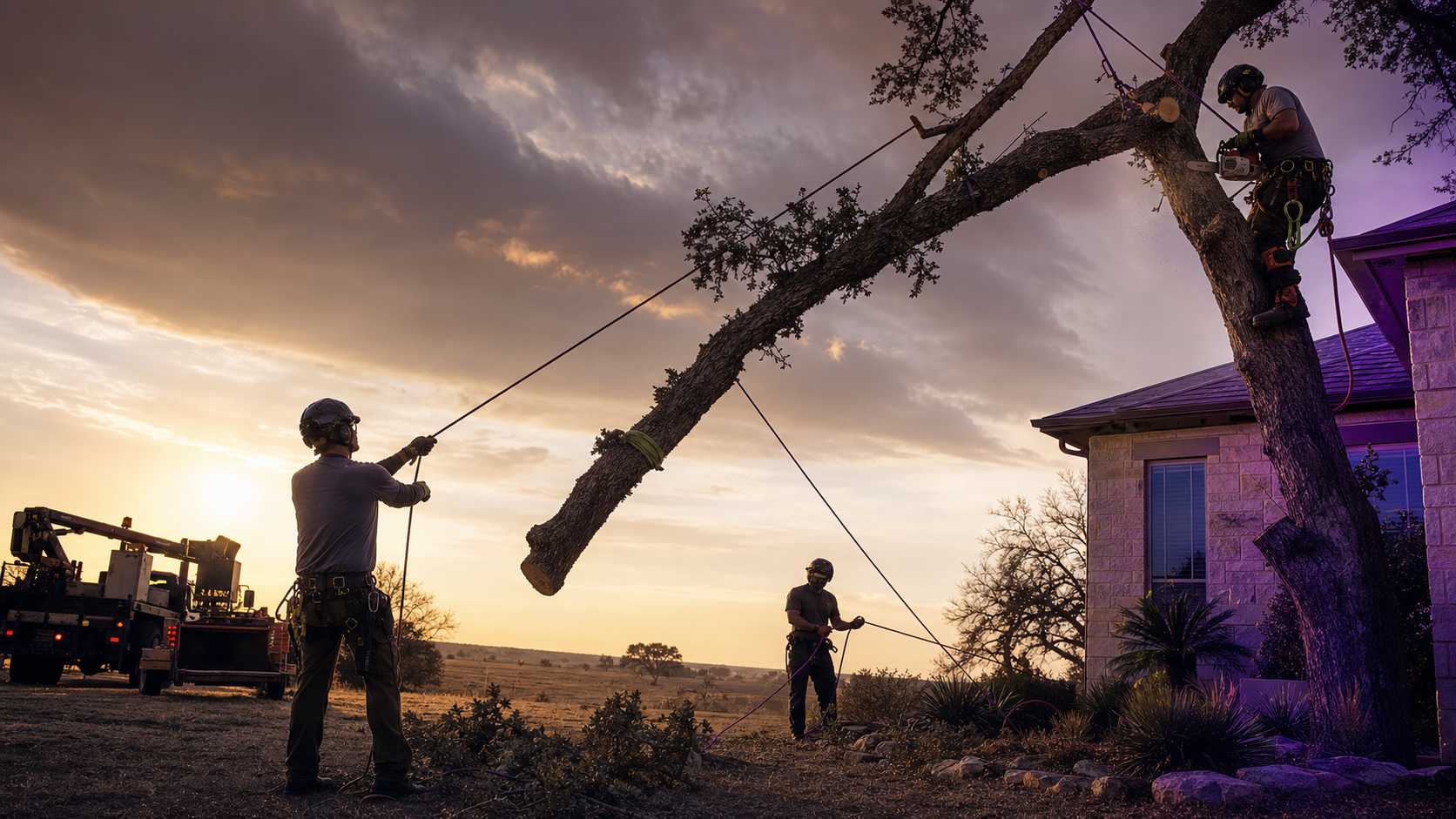
OSHA guidance for tree care emphasizes preliminary examination of the tree and work site for fall and struck-by hazards before operations begin. The customer does not need to design those controls, but a credible work plan should reflect that the site was considered rather than treating the tree as an isolated object.
Access and setup become explicit assumptions
The estimator may walk or photograph the route from the street, alley, or driveway to the work zone. Gate width, surface condition, slopes, tight turns, overhead obstructions, fences, landscaping, septic features, irrigation, and room to turn or stage material can all influence the plan.
This is also the time to identify owner responsibilities, such as moving vehicles, unlocking a gate, keeping pets inside, or providing access to an agreed area. If conditions change before the work date, tell the tree service so the plan can be reviewed rather than assuming the original setup still applies.
The written scope describes the finished result
The proposal should identify the tree and the work included. For trimming, that means a pruning objective or specific limbs and clearance. For removal, it should address the trunk and canopy, logs, limbs, and whether stump grinding is included. Brush, grading, excavation, or repairs should not be inferred when they are not listed.
Cleanup terms matter because phrases such as remove the tree do not explain what happens to chips, logs, small debris, or grindings. The document should also capture known access assumptions, exclusions, and any follow-up decision that depends on what is found during the work.
- Exact tree, limb, stump, or marked area included
- Requested outcome and work method at an appropriate level of detail
- Access route and site-preparation responsibilities
- Debris handling, stump terms, exclusions, and final site condition
Confirmation comes before scheduling and site preparation
Read the scope and ask questions before accepting it. Confirm that verbal details about cleanup, protected property, or stump work appear in writing. ISA consumer guidance recommends written agreements and careful review of their terms; it also encourages checking insurance and applicable credentials or licenses.
After the scope is accepted, timing can be coordinated around job requirements and availability. Before work begins, follow the agreed preparation steps and keep people outside the planned work area. When ground disturbance is involved, arrange required utility locating through Texas 811 and identify private systems that public locating may not mark.
Common questions
Answers before you make the call.
What should I send before a tree-service estimate?
Send the address, a short description of the concern and desired result, wide photos of the full tree and surrounding property, close views taken from a safe location, and photos or measurements of the access route.
What should a written tree-service scope include?
It should identify the tree or area, the included work, access assumptions, debris handling, stump terms when relevant, exclusions, property-owner preparation, and the expected condition of the site afterward.
Does requesting an estimate reserve a work date?
No. A request begins the review. The scope, estimate terms, availability, and schedule should be confirmed separately before anyone relies on a service date.
Primary references
Sources behind this guide.
Official and industry sources support the guidance above. Site conditions still require project-specific review.
Local service information
Near Abilene?
Review availability and property considerations in these nearby communities.
View all service areas