
Tree Decisions
What Affects Tree Removal Cost in Abilene? A Scope-First Guide
Learn what shapes an Abilene tree removal estimate, including tree size, condition, nearby targets, access, equipment, debris, and stump work.
There is no responsible single-number answer to the cost of removing a tree in Abilene without seeing the job. An estimate is built from the tree, what surrounds it, how workers and equipment can reach it, how sections can be controlled, and what should happen to the material afterward.
That is why height or trunk width alone cannot predict the scope. A smaller tree inside a tight fenced yard may involve more handling than a larger tree in open ground. The useful way to prepare is to document the factors a tree service must turn into a work plan, not to rely on an advertised price range.
Tree size describes volume, not the whole job
Height, trunk diameter, canopy spread, and limb size help indicate how much material is involved and whether elevated work may be necessary. Multiple trunks or wide-spreading branches can also change the sequence of cuts and the amount of material that must be moved through the property.
Size still needs context. Wide photos from several sides should show the full canopy and trunk base together with the ground below. A close-up of bark or one branch cannot show working height, drop space, or the route that cut material must travel.
Visible condition changes handling and planning
Dead wood, storm damage, splits, hanging material, cavities, and changes around the root area can affect how a crew approaches the tree. These observations should be reported plainly and reviewed on site when needed; a homeowner photo should not be treated as a complete diagnosis or structural assessment.
OSHA identifies falls, falling objects, chainsaws, chippers, and energized lines among the serious hazards in tree care. A removal estimate therefore reflects more than cutting time. It must allow for a preliminary tree and site review, suitable equipment, controlled work areas, and methods appropriate to the conditions found.
Nearby property determines how material can come down
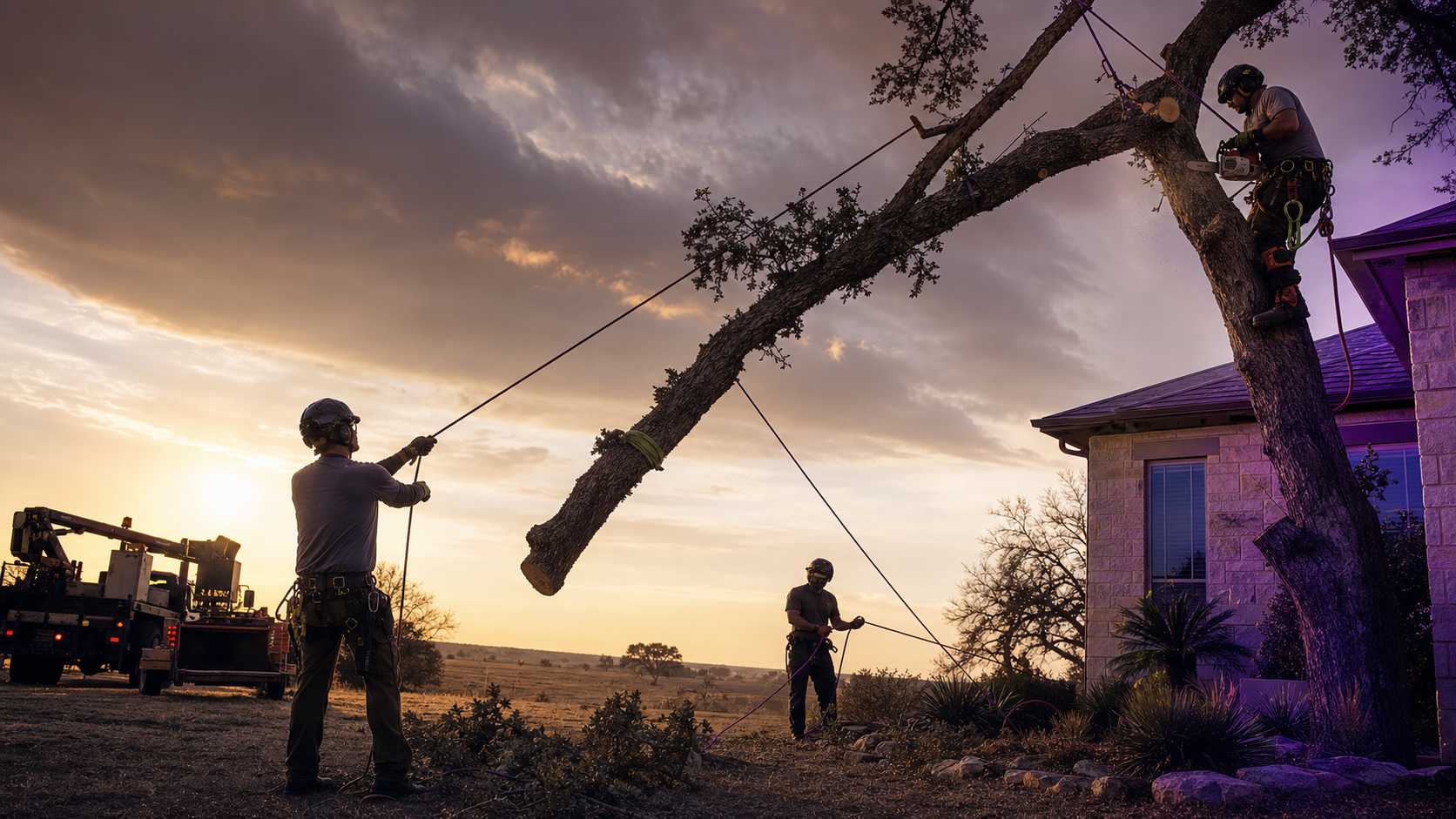
Homes, roof edges, fences, sheds, vehicles, sidewalks, neighboring property, landscaping, and overhead lines reduce the space available for tree sections and equipment. When open drop space is limited, a work plan may require smaller pieces, additional lowering steps, or a different setup.
Show both the canopy and every surface beneath it. Moveable items such as vehicles, patio furniture, and trailers may need to be relocated before work, while fixed targets must be built into the scope. Never move or approach tree material that is touching a power line; contact the utility first.
Access affects labor, equipment, and debris movement
The estimate should account for the route from the road, driveway, or alley to the tree. Gate width, tight turns, steps, slopes, ditches, soft ground, septic or irrigation features, and overhead clearance may limit which equipment can enter and where it can be positioned.
Measure the narrowest gate or passage and photograph the complete route. Also identify where logs and brush can be staged without blocking a driveway, gate, or public way. Better access information reduces assumptions, but the crew may still need to verify measurements and ground conditions on site.
The requested finish belongs in the estimate
Cutting the tree is only part of the possible scope. The written estimate should say whether limbs will be chipped or hauled, whether logs will be removed or stacked, how small debris will be handled, and which areas are expected to remain open during the work.
Stump grinding is a separate decision with its own diameter, depth, access, utility, irrigation, and grindings considerations. Texas 811 instructs homeowners and excavators to request utility locating before digging; private lines or irrigation may require separate identification. The estimate should state the intended stump finish without implying that grinding removes the entire root system.
- List every tree included in the scope.
- State the plan for limbs, logs, chips, and final cleanup.
- Separate stump grinding and its requested depth or finish.
- Record access assumptions and items the property owner must move.
Common questions
Answers before you make the call.
Can I get an exact Abilene tree removal estimate from one photo?
One photo rarely shows the complete canopy, trunk base, nearby targets, equipment route, and debris path. Multiple wide views can support an initial review, but an on-site visit may still be needed before the scope is finalized.
Why does access affect a tree removal estimate?
Access determines which equipment can reach the tree, where it can be positioned, and how logs and limbs can leave the work area. Gates, slopes, alleys, soft ground, and nearby structures can all change the work plan.
Does a tree removal estimate include hauling and stump grinding?
Only when those items are written into the scope. The estimate should separately address logs, limbs, chips, cleanup, stump grinding, grindings, and the expected final condition of the site.
Primary references
Sources behind this guide.
Official and industry sources support the guidance above. Site conditions still require project-specific review.
Local service information
Near Abilene?
Review availability and property considerations in these nearby communities.
View all service areas