
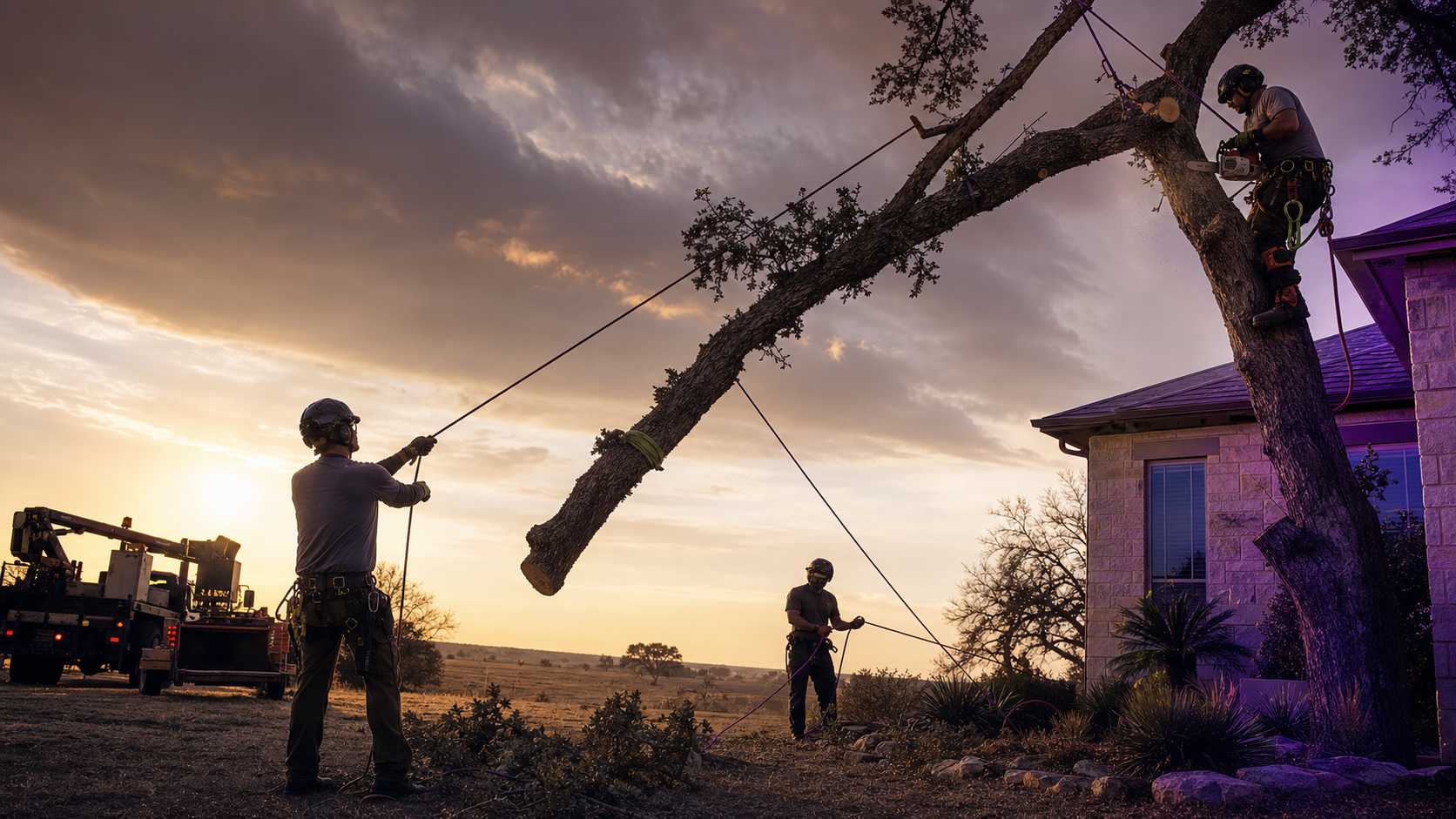
Tree Decisions
Tree Trimming vs. Removal in Abilene: How to Frame the Decision
Compare tree trimming and removal in Abilene by looking at the goal, visible condition, nearby property, access, and the limits of each option.
When a limb reaches over a roof or a tree looks different after high wind, it is natural to jump straight to either trimming or removal. Those labels are not interchangeable. Trimming is targeted work within a canopy, while removal takes the tree down and creates separate decisions about wood, cleanup, and the stump.
The better starting question is what needs to change on the property. An Abilene estimate should connect that goal to the complete tree, the space around it, and the route into the work area. Photos can begin the conversation, but they cannot always establish tree condition or the appropriate scope by themselves.
Start with the property goal
A trimming request should identify a specific result: clearance above a driveway, space beside a roof, removal of a broken limb, improved visibility, or more usable room beneath the canopy. Naming the target keeps the discussion focused on the branches involved instead of treating every part of the tree as a problem.
A removal review begins with a different goal. The tree may conflict with a planned use, occupy a space where no practical trimming objective exists, or have visible damage that warrants an on-site evaluation. A lean, sparse canopy, or single broken branch is not a diagnosis on its own, so the request should describe what changed and when rather than declare the tree unsafe.
Understand what trimming can and cannot do
The International Society of Arboriculture explains that every pruning cut should have a reason. Common pruning objectives include removing selected dead or weak branches, raising lower branches for clearance, and reducing height or spread through properly placed reduction cuts. Those are defined operations, not a general instruction to make the tree smaller.
Trimming also has limits. It cannot guarantee that a tree will withstand a future storm, and removing too much live canopy can create lasting stress or poor regrowth. Ask which limbs are included, why each group of cuts supports the stated goal, and whether the proposed work changes the tree's overall form.
- Identify the roof, drive, walk, fence, or sightline that needs clearance.
- Show the full canopy before sending close views of individual limbs.
- Ask for the intended pruning objective in the written scope.
Know when removal deserves a closer review
Removal may enter the conversation when a tree is dead, extensively damaged, obstructing a necessary use, or presenting concerns that targeted pruning would not resolve. The seriousness of cracks, cavities, root changes, decay indicators, or storm damage is best evaluated by a qualified professional who can see the tree and the possible targets around it.
That review should account for consequences as well as the tree. A branch above an unused corner of a lot presents a different situation than similar material above a bedroom, sidewalk, vehicle area, or utility line. The decision is therefore about the tree, the likelihood of failure, what could be struck, and whether a practical action can reduce the concern.
Include access, utilities, and cleanup in the decision
Two visually similar trees can require very different work plans. Gates, alleys, rooflines, fences, parked vehicles, soft ground, overhead lines, and room for equipment or lowered material all affect how a trimming or removal scope can be carried out. Photograph the route from the street or alley to the tree, including the narrowest point.
For removal, clarify whether logs and limbs will be hauled, stacked, chipped, or left in a designated area, and list stump grinding separately. For trimming, confirm the same debris terms and the exact branches or canopy objective. If tree material is touching a power line, stay away and contact the electric utility before arranging tree work.
Use the estimate to compare outcomes, not labels
A useful estimate makes the proposed result visible in words. It identifies the tree, the included work, access assumptions, debris handling, exclusions, and the expected condition of the site when the crew leaves. If one option is trimming and another is removal, ask what concern each option addresses and what remains afterward.
Do not treat trimming as automatically conservative or removal as automatically excessive. Either can be the wrong scope when it is disconnected from the tree and property. The decision should remain open until the visible concern, desired outcome, and work-site constraints have been reviewed together.
Common questions
Answers before you make the call.
Can photos tell me whether an Abilene tree needs trimming or removal?
Photos can show the overall tree, visible changes, nearby structures, and access. They may support an initial review, but some conditions and work-planning questions require an on-site visit before a scope is recommended.
Will trimming make a tree storm-proof?
No. Trimming cannot guarantee how a tree will respond to future wind, ice, or other conditions. The work should have a defined pruning objective and avoid promises about future performance.
Is stump grinding automatically included with tree removal?
No. Removal, log and limb handling, cleanup, and stump grinding should be listed separately in the written scope so the final condition of the area is clear.
Primary references
Sources behind this guide.
Official and industry sources support the guidance above. Site conditions still require project-specific review.
Local service information
Near Abilene?
Review availability and property considerations in these nearby communities.
View all service areas